

The 3 A’s of stigma remedy:
Acknowledge, Apprehend, Alleviate
In this section
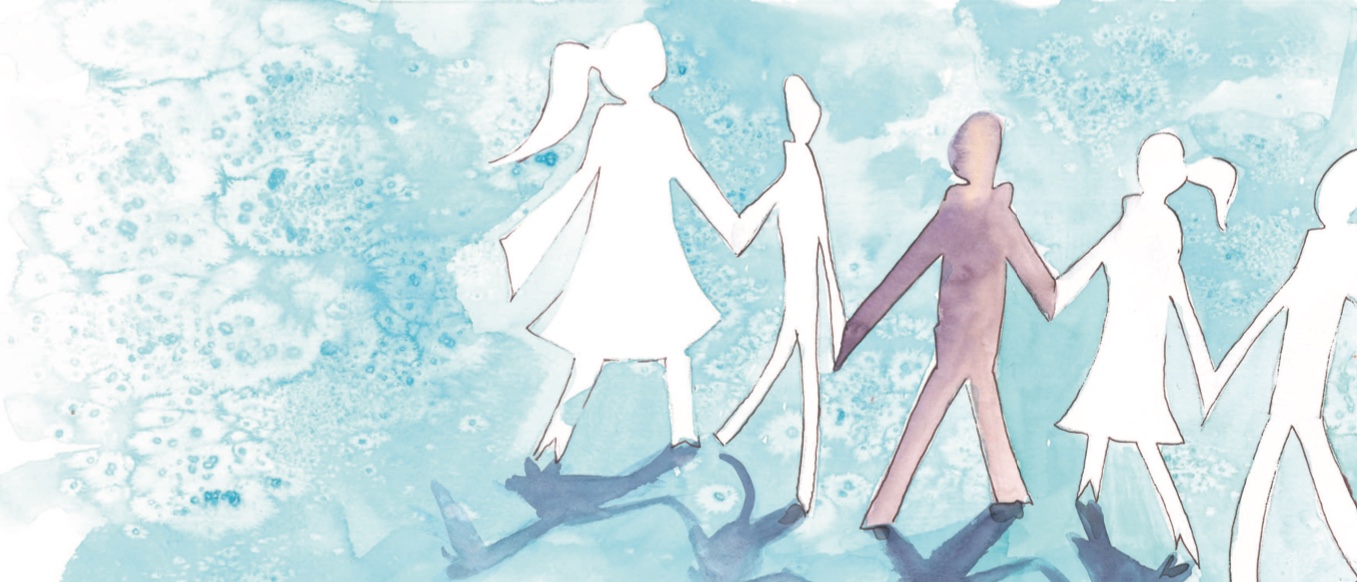
You are not alone!
There are more than 20 MILLION people living with schizophrenia around the world. By their side are the caregivers who face the same fears, difficulties, and challenges as you are right now. Get in touch with them. Join a support group or a caregivers association. There is a large network of caregivers in Europe who share the same goal: to positively impact the lives of those they care for.
This can also give you the opportunity to connect with other families affected by schizophrenia. People with schizophrenia and their families often feel isolated or misunderstood. You may find it helpful to connect with them and exchange experiences and advice.
Most importantly, talk to healthcare specialists. If there is a medical team taking care of your loved one, turn to them for advice. Become actively involved in the conversation. Remember: YOU ARE NOT ALONE!
– Mrs. A. J., mother of a young man with schizophrenia
First steps
Finding out that your loved one is diagnosed with schizophrenia can be one of the most daunting experiences of your life. You may feel that you are suddenly given a role you are not prepared for. You may experience feelings such as shock, anger, fear, frustration, guilt, and anxiety. You may also feel helpless, worried, confused, and embarrassed.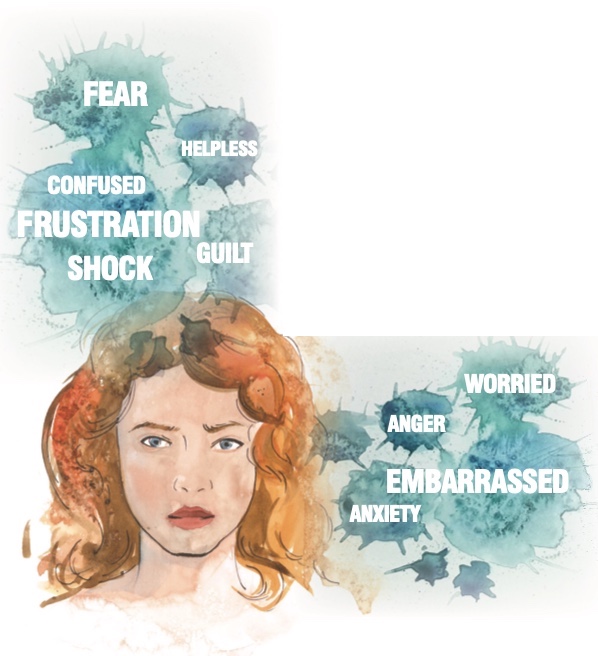
It is important to keep in mind that we have come a very long way in our understanding of schizophrenia. Today, with the right treatment and support, WE ARE ABLE TO MANAGE THE DISEASE AND HELP PEOPLE WITH SCHIZOPHRENIA take back their place in society and live a gratifying life. As a caregiver you are very important in the life of person with schizophrenia you care for. The first step in providing the support they need is accepting the diagnosis and understanding your own thoughts and emotions. In this process, it is very important to recognize that some of the negative thoughts you may have about schizophrenia are caused by the stigma associated with it.
–Mrs. A. J., mother of a young man with schizophrenia
Stigma and its raison d’être
What is stigma?
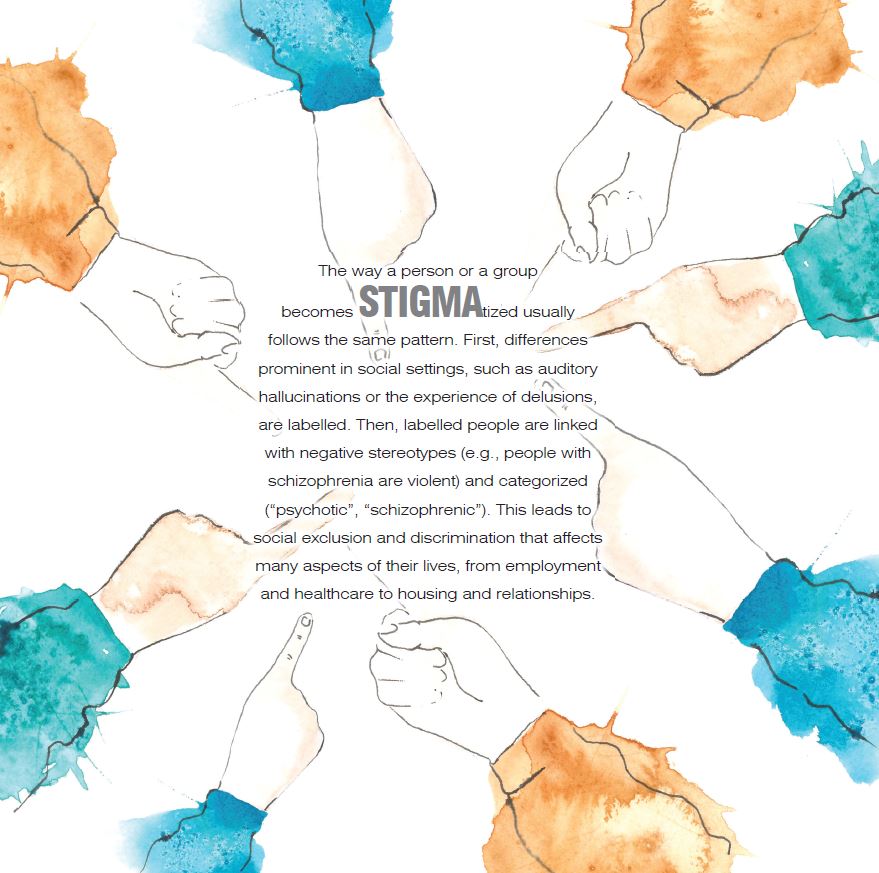
In Ancient Greece, the term “STIGMA” was used for the marks pricked into the skin of slaves. These marks signaled that they are someone’s property and have inferior social status. In our days, STIGMA represents something similar: we, as a society, mark a person for having a mental illness, a health condition, or a disability. We label them as inferior or threatening. As a result, they have to face negative attitudes in the form of prejudice, and negative behavior in the form of discrimination.
There are three types of STIGMA:
INTERPERSONAL STIGMA or SOCIAL STIGMA refers to the negative attitudes of society towards STIGMAtized individuals. These attitudes are caused by feelings of anger, anxiety, pity, or fear and result in the social rejection and isolation of the STIGMAtized person.
Example: “I’d like to invite everyone from the office to my party, but I’m afraid if poor George comes, he will make everyone feel awkward with his mental problem.”
INTERNALIZED STIGMA or SELF-STIGMA develops when stigmatized individuals believe the negative assumptions that society has about them. They internalize negative stereotypes and view themselves as flawed compared to others, which leads to emotions of embarrassment, shame, fear, and alienation. These feelings act as a barrier, keeping them from seeking support, employment, or treatment. Example: “Someone like me, a mentally ill person, is dangerous for their family. I will not even try to have a family.”
INSTITUTIONAL or STRUCTURAL STIGMA refers to situations where the policies established by institutions of either private or governmental nature limit, often invisibly, the opportunities of those experiencing mental illness (e.g., they have difficulties obtaining health insurance coverage, or they are unable to vote or hold political office).
Although many health conditions are affected by STIGMA, mental illnesses seem to attract the most negative associations. People with schizophrenia are often targets of negative attitudes and social labels that lead to STIGMA. The reason is that there is still a lot of misunderstanding surrounding schizophrenia. Many people assume that it means having split personalities or being violent, neither of which is true.
Historically, there is a persistent case of stigmatization around mental illness in our society. There was a wide range of beliefs regarding the cause of mental illness, from being regarded as the devil’s mark to being accounted as a divine punishment.
The mentally ill were considered at best unable to pursue a life in society and at worst a menace to it. This belief has remained consistent over numerous centuries and it has only started to be disputed fairly recently. In the last decades, we’ve learned a great deal about how these conditions develop and how they can be treated. In spite of this, the STIGMA of mental illness is still widespread, and many people continue to negatively view individuals with mental health conditions.
The stigma impact
STIGMA constitutes one of the major challenges that individuals experiencing mental illness have to face. In many cases, it is even worse than the symptoms of the illness itself. “IN FACT, I SUFFER FROM TWO DISEASES, SCHIZOPHRENIA AND THE STIGMA OF SOCIETY.” Regarding people with schizophrenia, stigma can affect not only their place in society but also their physical and emotional well-being. Thus, they have to endure not only the illness but also the negative attitudes that society attaches to them.
The social impact of STIGMA affects every life aspect of a person with schizophrenia. Prejudice and d